
 Note: This is the fourth and last of a series of articles called “C”-ing Your Way to Success about the value of Conviction, Clarity, Consistency and Change-ability in business.
The first three “C”s discussed in this series (Conviction, Clarity, Consistency) are paths, not destinations. While the successful development and execution of a business plan may use these guideposts, it is a mistake to think that the ultimate goal is 100% conviction, clarity or consistency in your operation. That is because other than death, change is the only certainty. In fact, the one often defines the other. When something ceases growing or responding, it is considered dead.
Our job then, is to become experts at understanding the nature of change, the patterns of growth.
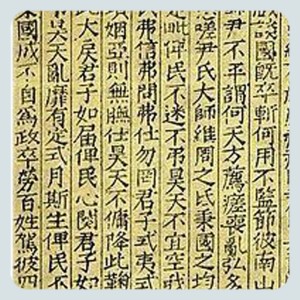
While the quality of consistency gives your business stability, nurturing “change-ability” gives your business flexibility. Both are essential. One of the best books you can study on the subject of change is not a business book at all. It is a philosophical treatise disguised as a book of divination. The I Ching, or Book of Changes, is one of the classics of Chinese literature and is at least three thousand years old. The I Ching catalogs sixty-four aspects of change, in the same number of chapters, which are essentially meditations on the patterns of growth in the universe.
Mastering change-ability is important in two ways. It makes you increasingly skillful at predicting what will happen next in your business, and it makes you flexible in your ability to respond to change.
Predictability
When you study the nature of change you become expert at seeing the larger patterns in which your business operates. The most common example of these patterns are business cycles. This is the normal ebb and flow of the activity in your business. These patterns repeat daily, weekly, monthly, yearly, or over even longer periods of time. The more skillful you are at recognizing these patterns the more accurately you will be able to create reliable forecasts in your business plan.
Let’s look at some examples of business cycles.
- The street fairs you work at tend to be slow in the morning, busy through the afternoon, with a late rush of customers, mostly people who worked in the other booths at the fair. Knowing that you will be about the last one to pack up and leave, you make certain that there is adequate staff and energy, for this final wave of business.
- You notice that when you provide chair massage in the workplace certain types of clients prefer to have a massage at the beginning of the week, others in the middle, and still others at the end of the week. Because you also have a table massage business on Mondays and Tuesdays, you can more easily target your marketing to the mid and late week groups.
- Your business increases the first and third week of every month because that is when you client base tends to get paid and can afford a massage. Consequently you plan your marketing and administrative chores for the second and fourth weeks of the month.
- You anticipate that you will always sell more gift certificates around holidays and special occasions and you know you have to begin your promotion plans at least two months in advance.
- Perhaps your business focus is on relaxation massage and you anticipate that most of your customers, after a year or so of allowing touch into their lives, will seek out other types of bodywork. To plan for that transition you establish mutual referral relationships with remedial therapists, Rolfers, Feldenkrais practitioners, sports massage bodyworkers, and the like.
The greater your ability to understand the processes of change, the more refined and accurate your business forecasts will be. As you become increasingly expert at recognizing the patterns inherent in your business you will develop an intuitive sense of what steps are needed at any given moment to keep your business healthy. Intuition, despite what some people claim, does not come from the cosmos. It is most often the result of awareness–paying attention to the smallest shifts in the world around us–and experience, lots of experience, over many years. The more we consciously accumulate business experience, the better we become at asking the right questions when faced with a business decision, and the more likely we are to arrive at the right answer.
Flexibility
Change-ability also means the ability to respond to the constantly changing business climate. When external and internal conditions alter, do we resist modifying our plans and actions, or do we smoothly adapt to the new circumstances? Developing flexibility in business is essential to long-term survival. There is no hiding from rapid change in our world. Being conscious of change makes it more predictable and being prepared for change makes it more manageable. Flexibility is the key to preparedness.
Practicing flexibility starts with exercising a flexible mind. Hopefully, the older we get, the more we appreciate the importance of accepting that what we believe is not always the way things are. Prejudice has no role in a flexible mind. When you start saying things like, “I can’t stand Republicans/Democrats/Jews/Mormons,” be careful. Not only are you limiting your options, but the world has a funny way of creating circumstances that may turn exactly those people into your next market.
A flexible mind also sees opportunities where other people see only problems. When circumstances in the business climate change it is always an opportunity for you to learn something new about your market, your service, the nature of business, or yourself. Don’t resist change, embrace it. Without change the world would be a very dull place. With change our businesses remain fresh, vibrant, and exciting places to spend our time.
 In the world wide web, “stickiness” refers to how long you can keep a user on your website or how often you can get them to return. It is a measure of user engagement and loyalty.
 For as long as people have been paying for therapeutic massage services, practitioners have feared being mistaken for prostitutes. That fear was the primary driving force that, in 1983, led the American Massage Therapy Association to re-brand “massage” into “massage therapy” in an attempt to define it as the health care profession. [

 Note: This is the third in a series of four articles called “C”-ing Your Way to Success about the value of
 This is one of the most common questions I hear from customers. It’s an important question and the response needs to be considered carefully because the answer will set the character and tone of all future interactions with that customer. I am going to offer a response that I have found creates the healthiest relationships with my customers.
 Laura Allen
 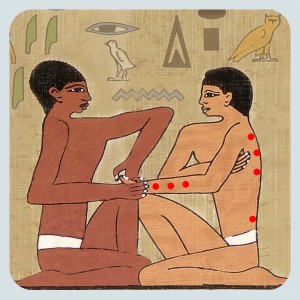 The year was 1983 and the oldest national association of massage practitioners was about to change the face of an industry by turning “massage” into “massage therapy.” This is the story of what led up to that moment.
 While having conviction about your work is fundamental to a successful value-based business, a second tool, clarity, is required to effectively communicate your conviction to the rest of the world so they can beat an enthusiastic path to your doorstep. Clarity has a number of important characteristics as it applies to business.
 Admittedly, since my oldest grandchild just entered second grade this year, I have been out of the loop regarding school board policies dealing with public displays of affection (PDA) between students. I guess, after watching Glee for three years, I had thought schools were getting more enlightened about the subject of consensual, non-sexual touch.
 Which profession should hold the keys to the storehouse that contains all of the world’s knowledge about human touch? Besides bodyworkers, is there any other (legal) occupation with more practical and theoretical knowledge about touch? I don’t think so and yet I have been struck by the fact that the massage profession often seems to relate to touch the same way fish relate to water. We take it for granted.
 For an entrepreneur, conviction is where it all starts. An exciting idea enters your brain and gets your juices flowing. You can’t stop thinking about it so you start testing the idea out in conversations with friends. After that reality check you begin making lists of considerations and steps to take to test out until you finally become convinced that you have to make the idea real.
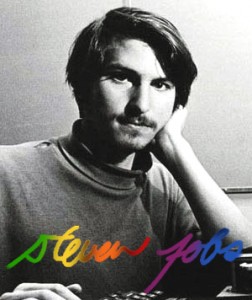 The first time we nervously walked into Apple Computer’s Macintosh division in 1984 to provide seated massage with our matching grey slacks, white polo shirts and blue blazers, we felt overdressed. At a time when the largest computer company in the world, IBM, was still requiring dark suits, white shirts and ties on all of its workers, while Apple employees were all about jeans and T-shirts. We immediately breathed a sigh of relief and settled in for a year that would change the massage industry forever.
 Last week Phuket, Thailand, featured two of its most famous tourist attractions–beaches and massage–as the Ministry of Health hosted one of five preliminary events leading up to an official attempt in November to break the Guinness World Record for most simultaneous massages (currently at 232 held by Tourism Victoria Australia).
 When I first began developing chair massage sequences in 1982, one of my students was also a student of
 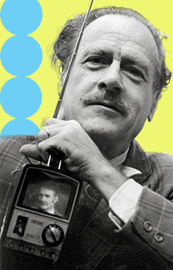 The author of The Medium is the Massage,
 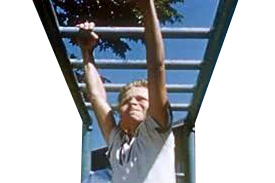 We all believe in the importance of fitness. Heck some of us are selling it. But what is fitness, and how do you achieve it?
 After an operation in 1974 put my right shoulder out of commission for a couple of months, I realized how little dexterity I had in my left hand relative to my right. What’s that all about, I thought. Who made that dominant hand rule that we live our lives by anyway? What’s so great about only developing half my body.

