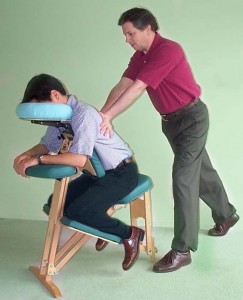
France recognizes seated massage as an occupational title

[Click to download a PDF of the press release version.]

France recently became the first country in the world to recognize seated massage as an occupational category with a professional certification. On June 7, 2016, the National Professional Certification Commission (Le Répertoire National des Certifications Professionnelles) approved Xavier Court Training as the sole provider of diplomas for Practitioners of Seated Massage.

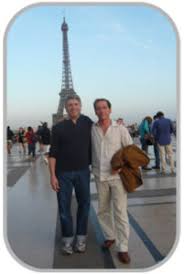
Xavier and David

Xavier and David

Xavier Court, owner of the school, began the application process three years ago after joining forces with chair massage pioneer, David Palmer, and becoming an affiliate of Palmer’s organization, TouchPro International. Their application received a Level 2 certification under the French grading system (Level 1 is University diplomas) giving it a high degree of professional credibility. Throughout Europe the training is also rated as EuroPass Level 6 (the highest being Level 8) making the credential easily portable between all EU countries.

The approved curriculum is 170 hours and includes training in the TouchPro acupressure approach to chair massage developed by Palmer in 1986. While over 40,000 table massage practitioners around the globe have already been taught this system in continuing education seminars, this is the first time it has been the centerpiece of an entry-level massage program. Besides mastering the TouchPro technique, requires training in anatomy, physiology, hygiene, ethics, customer relations, and marketing to qualify graduates as world class chair massage specialists.

This also marks the first time that France has approved a specific credential for any massage services. Up to this point, the physiotherapists have prevented massage practitioners from being recognized as an independently titled profession. Palmer speculates that because seated massage was specifically defined in this instance as non-therapeutic, relaxation massage the French physiotherapists found it less objectionable than table massage therapy being provided as a health care service.

Another TouchPro affiliate in Trinidad & Tobago has an application in process for Caribbean-wide chair massage credentialing as a discrete occupation and Palmer looks forward to other countries adopting similar curriculum. The likelihood of North America following suit is slim as both Canada and the United States still require practitioners to complete 500- to 2200-hour table massage programs in most states and provinces before practitioners can legally offer chair massage services.

[For further information, please contact David Palmer at dp@touchpro.com.]

From Chair to Table: How to Convert Your Chair Massage Clients

This article first appeared in the June 2015 of MASSAGE Magazine.

onsite massage copyChair massage often turns out to be just the right introduction people need to experience the joys and benefits of all varieties of structured touch. While not all chair massage clients will turn into table clients, often conversion success is simply a matter of not missing the opportunities presented by clients during the course of a chair massage encounter.

Here are three ways you can take advantage of such opportunities—and possibly win new table massage clients because of it.

Give massage away

Massage therapist Russ Borner can trace 80 percent of the $9,000 per month he typically grosses doing table massage to one specific chair massage he gave 30 years ago—for free—at a charity golf event in Westchester County, New York. His team had set up on the ninth hole to give each foursome of players a massage as they reached the halfway mark of the course.

After working a full day, they gathered in the lobby with all the players, who were getting ready for cocktails and dinner. Russ noticed a group of seven dedicated but very tired volunteers across the room, who looked like they also might appreciate a chair massage, so the team decided to offer their services.

One particular woman Russ worked on, Betsy, turned around in the chair after the massage was over and asked, “Do you make house calls?” She lived 40 miles away and was not wealthy enough to cover his travel expenses but, with a little negotiation, Russ agreed that if she could get two or three other friends to commit to a massage, he would be happy to make the trip. By the time Russ got home that night his answering machine was filled with requests from people saying, “Betsy told me you will be in our area next week. Can I book a massage with you?”

Betsy and her friends, and eventually their friends’ friends, kept making one positive word-of-mouth referral after another, until Russ had as much table massage work as he could handle. He and his wife Candice now run three spas, along with his thriving outcall practice of loyal table clients who pay $150 to $175 per massage. And, yes, Russ still gives Betsy her weekly massage—at half-price, with every fourth massage free in appreciation of her amazing networking skills.

Explain how you can help

Another typical scenario is people seeking a chair massage complaining of pain in their head, neck, shoulders, arms, hands or back. That is a perfect opportunity to educate clients about at least two levels of massage: systemic massage and focused work. Here is a sample script for moving those clients to your table:

“Chair massage is a systemic massage designed to help your body heal itself. So, although I won’t be addressing your specific problem, whether or not your complaint disappears by the end of this 10-minute session, I can guarantee you will feel better. If you prefer that I focus on your specific issue, I can make an appointment for you in my table practice, where we will have the time to thoroughly evaluate your issue and find the most effective solution.”

Make chair massage an appetizer

At one-time chair massage events, where you never expect to see the client again, you can often position chair massage as a sample of your regular table work. In these situations, at the end of each massage, Russ Borner will ask clients if they have ever had a table massage before. If not, he hands them a business card and invites them to experience one. People are much more likely to book their second massage with the practitioner who gave them their first massage, as long as the first experience was positive.

If his chair massage clients have previously had table massage, Russ makes this offer: “If you are willing to try a table massage from me and it is not one of the top three massages you have ever had in your life, then you don’t have to pay me.” In this case, clients have just had a sample of how good he can make them feel, and the guarantee makes the table massage virtually risk-free.

Massage marketing is ultimately about education, and the best way to educate someone about the value of your massage is to give them a sample. Chair massage is the perfect appetizer.

Touch Education in the Workplace

(This article first appeared in the June 2015 issue of MASSAGE Magazine,)
The hand of GodOver the past three decades American culture has become increasingly touch averse. While few question the importance of touch for the healthy development of newborns, infants and young children, something unfortunate begins to happen about the time kids get ready for school. They learn to fear touch.

Some of this learning comes from parental cautions about not allowing strangers to touch you. But, mostly, children learn by example. What they see is that no neighbor, teacher, minister, adult friend or, sometimes, even relatives are allowed to offer them affectionate touch.

Then it is on to adolescence where, just as the hormonal storm whips up our need for touch to hurricane force, the “don’t touch” messages take on a new level of urgency. We learn the terrors of touch that results in pregnancy, STDs, date rape, or being called Gay.

Finally, after entering the workforce, we encounter institutional policies about sexual harassment that tend to frown on, if not outright ban, all touching.

What a world we have created. We are taught not to hit, but not how to caress. The media bombards us with images of abusive touch and sexualized touch, but not affectionate or sacred touch. In a society where touch is pathologized so early and so often, it is virtually impossible to grow up without accruing a wide array of unconscious negative and defensive responses to touch.

The marketing conundrum

This makes marketing massage particularly challenging. The massage profession has been swimming upstream against a torrent of cultural and institutional touch phobia for decades. It is unquestionably the biggest marketing barrier faced by our industry and yet, curiously, we barely acknowledge its existence.

Fortunately, there has never been a better moment in history to tackle this marketing problem head on. The emergence of a robust technology for delivering safe touch to the marketplace, i.e. chair massage, has recently converged with a strong scientific foundation validating the importance of positive touch.

To carry this pro-touch banner we need to redefine ourselves as the “touch educators” of our culture. No other profession has taken on this crucially important job of advocating for a touch-positive society and the massage profession is uniquely positioned to assume this responsibility. It is time for the massage profession to embrace touch and become true touch educators.

The reframing of chair massage

Chair massage is far and away the most accessible option we have for delivering skilled touch services to dozens of market sectors, such as the workplace, that have not be served by traditional table massage. However, because of its typically short time frame, chair massage has never sat comfortably as a health care profession. Without question, the vast number of practitioners providing chair massage in the workplace, at events, or in retail settings are offering a personal care service for simple relaxation, not a health care service for treatment.

Fortunately, recent science has established the fact that touch is good for us. While that may come as no surprise to the massage profession, research that describes the underlying physiology of touch is a tremendous marketing breakthrough. We can now tell our customers exactly why massage makes them feel good.

Within seconds of receiving positive touch, two indisputable and totally involuntary reactions occur. The first is that the bloodstream gets flooded with oxytocin, the feel-good hormone. The second is the activation of the parasympathetic nervous system (PSNS), otherwise known as the relaxation response.

Oxytocin immediately makes us feel calm and connected in empathetic ways to both our internal and external environments. When the PSNS relaxation response is triggered, our bodies move into healing mode where digestion occurs, organs repair and our immune response is activated. Significantly, when the PSNS is stimulated, the stress response (SNS: Sympathetic Nervous System) always diminishes. The two systems are complementary.

These mechanisms can be easily communicated to customers and add an important scientific layer of credibility to our simple touch services. We no longer have to promise musculoskeletal miracles to justify our services, but can confidently make the case that positive touch is enough.

“What we think, we become.” -Buddha

With good science and an accessible delivery system in place, how do massage practitioners build an identity as a touch educator? The first step is to filter our massage work through the lens of skilled touch.

For example, every massage we perform is a validation, through direct experience, of the importance of positive physical human contact. Thus, since every massage becomes a tutorial in touch, then every practitioner must already be a touch educator.

We can use that filter to reframe the whole massage experience for each customer before, during and after every massage. Below are some examples of that reframing but first, a note about terminology.

You don’t actually have to use the word “touch” to be a touch educator. Fortunately “massage” is a perfectly acceptable code word for touch. Each conversation will be different but I often start out by talking about massage and then slowly injecting the notion of touch in to the dialogue.

When doing chair massage I avoid the terms “therapy,” “therapist” and “treatment.” The point is to keep the expectations of the customer focused on the substantial benefits of touch rather than massage therapy done to resolve specific musculoskeletal issues. I describe myself a “massage practitioner” or a “chair massage specialist.”

The guarantee

“No matter how you feel before you sit down, if you don’t feel better when you leave the chair, the massage is free.”

Such a money-back guarantee is a powerful way to highlight the most basic benefit of positive touch—it makes us feel better. No matter if your headache, stiff neck, backache or repetitive strain injury goes away, we know that a surge of oxytocin and stimulation of the parasympathetic system will invariably transform the brain and the body into a more positive and productive environment.

How many services can offer a money-back guarantee on feeling good? It is a rare and valuable gift to guarantee that, no matter how you feel right this moment, in just 10-, 20- or 30-minutes you will feel better. And, there is nothing magical or mystical about massage. In fact, the job of a touch educator is to demystify touch. Without the help of any hocus pocus or hanky-panky, massage makes us feel better.

It is just good science.

Touch is sensational

Often, at the beginning of a massage, I will make some version of this comment: “Everyplace I touch during the massage will have a sensation. I want those sensations to be good, not bad. You need to let me know if any sensation feels uncomfortable, OK?”

All touch creates sensation. One of the goals of chair massage is to reconnect people with their sensational selves. Contemporary culture tends to shut down the links between our brains and our bodies and interrupt our natural sensory feedback systems by numbing our bodies with drugs or over stimulating our minds with media, video games and the like.

Encouraging feedback during a massage is an important way for people to take ownership of how they feel. So many people have fallen into the trap of believing that how they feel is a result of external circumstances beyond their control. The current fascination with zombies is, I believe, a disturbing reflection of our own personal and cultural disembodiment.

Reinforce the connection

There are many ways to reinforce the connection between massage and the myriad benefits of touch in the massage relationship. Be on the lookout for opportunities to share the following messages. For example, often in response to some comment about how awesome a customer feels during or after a massage I might say:

  • A little touch goes a long way.
  • It is amazing how a little oxytocin boost can lift our mood and make our world a little more manageable.
  • We call massage “an instant attitude adjustment.”

Here are a couple of other educations notions I like to share with stressed out customers:

  • By making us more mindful of the present moment massage helps turn obstacles into challenges and big problems into manageable tasks
  • Too often our bodies spend too much time either in stress response or waiting for a stress response. Each time we get pinged by an arriving email or text message our body gets a little jolt of adrenalin. That’s good for fighting or fleeing tigers, but bad for navigating our day-to-day lives. Massage helps make the relaxation response a habit.

Traditionally, chair massage in the workplace was always framed in terms of such variables as increased productivity and morale along with reduced stress and absenteeism. Unfortunately the evidence behind such claims has always been sketchy at best. However, when filtered through the lens of touch science, all of these outcomes make sense. Consider these impacts of positive touch:

  • Massage/touch brings out minds and bodies back into the present moment, which is where, as the mindfulness experts keep telling us, all of the best decisions are made.
  • Because massage stimulates the relaxation response we know that relaxed employees are focused, healthy and happy workers.
  • The immediate oxytocin boost provided by a massage results in an increase in morale and collaboration.

The touch connection

From the moment of birth we crave connection with other human beings. Touch is the first and most fundamental manifestation of that connection. It is also the most intimate connection but, unfortunately, our cultural fears around intimacy are wide and deep.

Chair massage is the perfect container for the non-threatening intimacy. I remember the first time I heard a woman remark to me in the early 1980s that her chair massage experience was the first time she could remember a man touching her non-sexually.

Touch is fundamental to all massage. Since no other profession has taken up the mantle of being the cultural experts in touch, it only makes sense that our profession should carry that banner and become the primary advocates for the benefits of positive touch.

Adding the identity of a touch professional/educator/advocate to your chair massage work will transform your practice, your relationship with your customers and, maybe, even yourself. Let’s start building a pro-touch society one touch-informed massage at a time.

Further resources

To help you get started in becoming a conscious touch educator check out the latest touch research detailed in the new book, Touch by David J. Linden. You can also follow current touch news from Suzanne Zeedyk: The Science of Human Connection and UC Berkeley’s Greater Good Science Center.

 

Massage Chair Inventor Profile

[youtube_sc url=”http://www.youtube.com/watch?v=6FFlwzIZusY&feature=share&list=PL1mtdjDVOoOpzYNFdLmgAxAaKTzwrOi2z” title=”David%20Palmer%20-%20Inventor” fs=”1″]Sometime around 2008, New York-based photographer David Friedman flew out to San Francisco to include me in an online series of portraits he was doing on inventors. During the photo shoot he also recorded a video interview which recently appeared on a new YouTube Channel called PBS Digital Studios.

Even though I was having a bad hair day the 3-minute video is well-edited and covers my essential motivations behind the development of the first massage chair. What isn’t specifically mentioned in the piece is the name of best massage chair on the market, the Stronglite Ergo Pro, which I co-developed.

One note about the video. The chair massage being performed was shot at a salon/spa in Brooklyn and has nothing in common with the chair massage approach we teach through TouchPro. Knee in the back? Ouch!

You can also read a more detailed version of the history of the first chair and view a cute video of the original chair. Enjoy!

Chair Practitioner as Wellness Coach

Massage Magazine May 2013 CoverThis article originally appeared in the May 2013 issue of Massage Magazine. The focus of the issue was on the business of massage and I was asked to respond to the question:

How can I best position myself as a wellness coach offering chair massage services to business?

Here is my response:
In a previous article I discussed why becoming a wellness coach is a good strategy for marketing workplace massage. To position yourself as a credible wellness coach for massage I suggest getting a credential and a good rationale justifying your services. The established wellness industry can give you the first and some revolutionary research the second.

Credentials
Formal training in wellness is often as close as your local academic institution, which may offer degrees or certification in health, wellness and fitness. A quick search will also put you in touch with related academic extension and online courses.

You can also access professional training and specialized credentials through non-profit organizations such as the National Wellness Institute or The Corporate Health and Wellness Association, both of which offer online and in-person training, certification, membership and conferences.

Both the academic and professional credentials are useful paths for getting a broad-based foundation in wellness and developing credibility as a wellness coach. However, you will quickly discover that massage is rarely found in the curricula of the mainstream wellness industry. In part, this is because of our deep-seated cultural phobia regarding touch. Specific prohibitions about touching are still routinely included in many corporate sexual harassment policies.

This absence of attention to massage by the wellness industry is also indicative of an absence of good data justifying the benefits of massage in the workplace.

It wasn’t until 2012 that the first (and as of this writing, only) textbook surveying the field of massage research was published (Massage Therapy: Integrating Research and Practice. Edited by Dryden and Moyer). With chapters on cancer, fibromyalgia, scars, sexual trauma, anxiety and depression, low back pain, neck and shoulder pain, headaches as well as special populations (pediatrics, pregnancy and labor, athletes, and older adults) it appeared that there was little evidence to construct a proactive rationale for massage in the workplace.

Fortunately corporate attitudes are in rapid transition and positive justifications for massage are appearing.

Corporate attitudes
Thirty years ago only in my wildest dreams could I have imagined a business conference entitled Wisdom 2.0 that would bring together leaders from some of the most successful tech companies (Google, Facebook, LinkedIn, Twitter and Cisco) together with academics, researchers, politicians and spiritual educators (such as Marianne Williamson, Jon Kabot-Zinn, Jack Kornfield) to discuss “how to live with greater wisdom, purpose and meaning.” Yet, that is exactly what happened this past February for four days in San Francisco.

Check out videos of some of these presentations. Listen carefully and you will hear the business jargon of future and it will contain words like presence, engagement, compassion and mindfulness and concepts such as conscious capitalism, the innovative mindset, places and spaces of intimacy and reclaiming our selves.

Another easy way to learn about the changing values in business is by tapping into the seemingly bottomless library of presentations offered up by TEDTalks (www.ted.com). One word you will hear over and over again in all of these discussions is connection. Companies want their employees to feel connected to themselves, to each other, to customers, to their work, to their communities, to their environment and even to the greater good of all humankind.

Of course, touch is the physical manifestation of connection and chair massage is a very safe container for a whole lot of touch. So, in the massage version of a wellness coach we are actually connection experts.

Revolutionary research
Why is massage so good at creating a sense of internal and external connectedness? In a word—oxytocin. In the past ten years, this hormone/neurotransmitter has risen from obscurity to take a leading role in the wellness narrative. Here is the short, somewhat oversimplified rags-to-riches story starting with some basic physiology.

The autonomic nervous system has two complementary branches: the sympathetic nervous system (SNS), which generally activates our fight or flight response, and the parasympathetic nervous system (PSNS) which generally promotes rest and recovery and makes us feel calm and connected.

We live in a sea of stress caused primarily by over-stimulation of the SNS. Too much noise, too many smells, too many people, too much work, too much email, too many perceived dangers. The fight or flight response, once the occasional visitor when a tiger crossed our path, has become a constant companion. This chronic stress response has been dissected in thousands of research papers and the conclusion is simple, we are overwhelmed physically, mentally and emotionally.

What has been studied far less, until now, is the PSNS that stills the waters and brings a sense of peace and calm, comfort and compassion, healing and health to our lives. Evidence is mounting that the primary chemical that triggers this parasympathetic response is oxytocin. Originally thought to be released only during childbirth and breastfeeding, oxytocin is now known to be produced by the pituitary gland of both males and females throughout our lives.

We also now know that the most efficient way to stimulate the release of oxytocin is through caring touch. This means that we have a scientific rationale for why massage makes us feel better that we can explain to companies and customers. For the last 25 years my key message was “Circulation is not optional” now it is “Oxytocin is not optional.”

When oxytocin kicks in employees feel better about themselves and each other, productivity and creativity increase because energy is no longer drained away by a hyperactive SNS, and the multiple health problems brought on by a chronic stress response are reduced, resulting in lower absenteeism and health care costs.

Conclusion
To become a serious wellness coach to business carrying the banner of massage, get a credential and become an oxytocin expert by checking out the pioneering work of Kersten Unvas Moberg (The Oxytocin Factor), Paul Zak (The Moral Molecule) and Dr. Gabor Maté (drgabormate.com). The latter two have some engaging videos on YouTube.