by David Palmer | Jun 23, 2015 | Chair Massage, Marketing
This article first appeared in the June 2015 of MASSAGE Magazine.
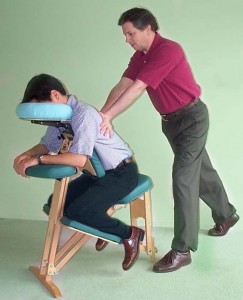 Chair massage often turns out to be just the right introduction people need to experience the joys and benefits of all varieties of structured touch. While not all chair massage clients will turn into table clients, often conversion success is simply a matter of not missing the opportunities presented by clients during the course of a chair massage encounter.
Here are three ways you can take advantage of such opportunities—and possibly win new table massage clients because of it.
Give massage away
Massage therapist Russ Borner can trace 80 percent of the $9,000 per month he typically grosses doing table massage to one specific chair massage he gave 30 years ago—for free—at a charity golf event in Westchester County, New York. His team had set up on the ninth hole to give each foursome of players a massage as they reached the halfway mark of the course.
After working a full day, they gathered in the lobby with all the players, who were getting ready for cocktails and dinner. Russ noticed a group of seven dedicated but very tired volunteers across the room, who looked like they also might appreciate a chair massage, so the team decided to offer their services.
One particular woman Russ worked on, Betsy, turned around in the chair after the massage was over and asked, “Do you make house calls?” She lived 40 miles away and was not wealthy enough to cover his travel expenses but, with a little negotiation, Russ agreed that if she could get two or three other friends to commit to a massage, he would be happy to make the trip. By the time Russ got home that night his answering machine was filled with requests from people saying, “Betsy told me you will be in our area next week. Can I book a massage with you?”
Betsy and her friends, and eventually their friends’ friends, kept making one positive word-of-mouth referral after another, until Russ had as much table massage work as he could handle. He and his wife Candice now run three spas, along with his thriving outcall practice of loyal table clients who pay $150 to $175 per massage. And, yes, Russ still gives Betsy her weekly massage—at half-price, with every fourth massage free in appreciation of her amazing networking skills.
Explain how you can help
Another typical scenario is people seeking a chair massage complaining of pain in their head, neck, shoulders, arms, hands or back. That is a perfect opportunity to educate clients about at least two levels of massage: systemic massage and focused work. Here is a sample script for moving those clients to your table:
“Chair massage is a systemic massage designed to help your body heal itself. So, although I won’t be addressing your specific problem, whether or not your complaint disappears by the end of this 10-minute session, I can guarantee you will feel better. If you prefer that I focus on your specific issue, I can make an appointment for you in my table practice, where we will have the time to thoroughly evaluate your issue and find the most effective solution.”
Make chair massage an appetizer
At one-time chair massage events, where you never expect to see the client again, you can often position chair massage as a sample of your regular table work. In these situations, at the end of each massage, Russ Borner will ask clients if they have ever had a table massage before. If not, he hands them a business card and invites them to experience one. People are much more likely to book their second massage with the practitioner who gave them their first massage, as long as the first experience was positive.
If his chair massage clients have previously had table massage, Russ makes this offer: “If you are willing to try a table massage from me and it is not one of the top three massages you have ever had in your life, then you don’t have to pay me.” In this case, clients have just had a sample of how good he can make them feel, and the guarantee makes the table massage virtually risk-free.
Massage marketing is ultimately about education, and the best way to educate someone about the value of your massage is to give them a sample. Chair massage is the perfect appetizer.
by David Palmer | Jun 11, 2015 | Chair Massage, Marketing, Touch
(This article first appeared in the June 2015 issue of MASSAGE Magazine,)
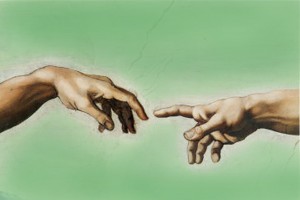 Over the past three decades American culture has become increasingly touch averse. While few question the importance of touch for the healthy development of newborns, infants and young children, something unfortunate begins to happen about the time kids get ready for school. They learn to fear touch.
Some of this learning comes from parental cautions about not allowing strangers to touch you. But, mostly, children learn by example. What they see is that no neighbor, teacher, minister, adult friend or, sometimes, even relatives are allowed to offer them affectionate touch.
Then it is on to adolescence where, just as the hormonal storm whips up our need for touch to hurricane force, the “don’t touch” messages take on a new level of urgency. We learn the terrors of touch that results in pregnancy, STDs, date rape, or being called Gay.
Finally, after entering the workforce, we encounter institutional policies about sexual harassment that tend to frown on, if not outright ban, all touching.
What a world we have created. We are taught not to hit, but not how to caress. The media bombards us with images of abusive touch and sexualized touch, but not affectionate or sacred touch. In a society where touch is pathologized so early and so often, it is virtually impossible to grow up without accruing a wide array of unconscious negative and defensive responses to touch.
The marketing conundrum
This makes marketing massage particularly challenging. The massage profession has been swimming upstream against a torrent of cultural and institutional touch phobia for decades. It is unquestionably the biggest marketing barrier faced by our industry and yet, curiously, we barely acknowledge its existence.
Fortunately, there has never been a better moment in history to tackle this marketing problem head on. The emergence of a robust technology for delivering safe touch to the marketplace, i.e. chair massage, has recently converged with a strong scientific foundation validating the importance of positive touch.
To carry this pro-touch banner we need to redefine ourselves as the “touch educators” of our culture. No other profession has taken on this crucially important job of advocating for a touch-positive society and the massage profession is uniquely positioned to assume this responsibility. It is time for the massage profession to embrace touch and become true touch educators.
The reframing of chair massage
Chair massage is far and away the most accessible option we have for delivering skilled touch services to dozens of market sectors, such as the workplace, that have not be served by traditional table massage. However, because of its typically short time frame, chair massage has never sat comfortably as a health care profession. Without question, the vast number of practitioners providing chair massage in the workplace, at events, or in retail settings are offering a personal care service for simple relaxation, not a health care service for treatment.
Fortunately, recent science has established the fact that touch is good for us. While that may come as no surprise to the massage profession, research that describes the underlying physiology of touch is a tremendous marketing breakthrough. We can now tell our customers exactly why massage makes them feel good.
Within seconds of receiving positive touch, two indisputable and totally involuntary reactions occur. The first is that the bloodstream gets flooded with oxytocin, the feel-good hormone. The second is the activation of the parasympathetic nervous system (PSNS), otherwise known as the relaxation response.
Oxytocin immediately makes us feel calm and connected in empathetic ways to both our internal and external environments. When the PSNS relaxation response is triggered, our bodies move into healing mode where digestion occurs, organs repair and our immune response is activated. Significantly, when the PSNS is stimulated, the stress response (SNS: Sympathetic Nervous System) always diminishes. The two systems are complementary.
These mechanisms can be easily communicated to customers and add an important scientific layer of credibility to our simple touch services. We no longer have to promise musculoskeletal miracles to justify our services, but can confidently make the case that positive touch is enough.
“What we think, we become.” -Buddha
With good science and an accessible delivery system in place, how do massage practitioners build an identity as a touch educator? The first step is to filter our massage work through the lens of skilled touch.
For example, every massage we perform is a validation, through direct experience, of the importance of positive physical human contact. Thus, since every massage becomes a tutorial in touch, then every practitioner must already be a touch educator.
We can use that filter to reframe the whole massage experience for each customer before, during and after every massage. Below are some examples of that reframing but first, a note about terminology.
You don’t actually have to use the word “touch” to be a touch educator. Fortunately “massage” is a perfectly acceptable code word for touch. Each conversation will be different but I often start out by talking about massage and then slowly injecting the notion of touch in to the dialogue.
When doing chair massage I avoid the terms “therapy,” “therapist” and “treatment.” The point is to keep the expectations of the customer focused on the substantial benefits of touch rather than massage therapy done to resolve specific musculoskeletal issues. I describe myself a “massage practitioner” or a “chair massage specialist.”
The guarantee
“No matter how you feel before you sit down, if you don’t feel better when you leave the chair, the massage is free.”
Such a money-back guarantee is a powerful way to highlight the most basic benefit of positive touch—it makes us feel better. No matter if your headache, stiff neck, backache or repetitive strain injury goes away, we know that a surge of oxytocin and stimulation of the parasympathetic system will invariably transform the brain and the body into a more positive and productive environment.
How many services can offer a money-back guarantee on feeling good? It is a rare and valuable gift to guarantee that, no matter how you feel right this moment, in just 10-, 20- or 30-minutes you will feel better. And, there is nothing magical or mystical about massage. In fact, the job of a touch educator is to demystify touch. Without the help of any hocus pocus or hanky-panky, massage makes us feel better.
It is just good science.
Touch is sensational
Often, at the beginning of a massage, I will make some version of this comment: “Everyplace I touch during the massage will have a sensation. I want those sensations to be good, not bad. You need to let me know if any sensation feels uncomfortable, OK?”
All touch creates sensation. One of the goals of chair massage is to reconnect people with their sensational selves. Contemporary culture tends to shut down the links between our brains and our bodies and interrupt our natural sensory feedback systems by numbing our bodies with drugs or over stimulating our minds with media, video games and the like.
Encouraging feedback during a massage is an important way for people to take ownership of how they feel. So many people have fallen into the trap of believing that how they feel is a result of external circumstances beyond their control. The current fascination with zombies is, I believe, a disturbing reflection of our own personal and cultural disembodiment.
Reinforce the connection
There are many ways to reinforce the connection between massage and the myriad benefits of touch in the massage relationship. Be on the lookout for opportunities to share the following messages. For example, often in response to some comment about how awesome a customer feels during or after a massage I might say:
- A little touch goes a long way.
- It is amazing how a little oxytocin boost can lift our mood and make our world a little more manageable.
- We call massage “an instant attitude adjustment.”
Here are a couple of other educations notions I like to share with stressed out customers:
- By making us more mindful of the present moment massage helps turn obstacles into challenges and big problems into manageable tasks
- Too often our bodies spend too much time either in stress response or waiting for a stress response. Each time we get pinged by an arriving email or text message our body gets a little jolt of adrenalin. That’s good for fighting or fleeing tigers, but bad for navigating our day-to-day lives. Massage helps make the relaxation response a habit.
Traditionally, chair massage in the workplace was always framed in terms of such variables as increased productivity and morale along with reduced stress and absenteeism. Unfortunately the evidence behind such claims has always been sketchy at best. However, when filtered through the lens of touch science, all of these outcomes make sense. Consider these impacts of positive touch:
- Massage/touch brings out minds and bodies back into the present moment, which is where, as the mindfulness experts keep telling us, all of the best decisions are made.
- Because massage stimulates the relaxation response we know that relaxed employees are focused, healthy and happy workers.
- The immediate oxytocin boost provided by a massage results in an increase in morale and collaboration.
The touch connection
From the moment of birth we crave connection with other human beings. Touch is the first and most fundamental manifestation of that connection. It is also the most intimate connection but, unfortunately, our cultural fears around intimacy are wide and deep.
Chair massage is the perfect container for the non-threatening intimacy. I remember the first time I heard a woman remark to me in the early 1980s that her chair massage experience was the first time she could remember a man touching her non-sexually.
Touch is fundamental to all massage. Since no other profession has taken up the mantle of being the cultural experts in touch, it only makes sense that our profession should carry that banner and become the primary advocates for the benefits of positive touch.
Adding the identity of a touch professional/educator/advocate to your chair massage work will transform your practice, your relationship with your customers and, maybe, even yourself. Let’s start building a pro-touch society one touch-informed massage at a time.
Further resources
To help you get started in becoming a conscious touch educator check out the latest touch research detailed in the new book, Touch by David J. Linden. You can also follow current touch news from Suzanne Zeedyk: The Science of Human Connection and UC Berkeley’s Greater Good Science Center.
by David Palmer | Oct 2, 2014 | Chair Massage, Marketing
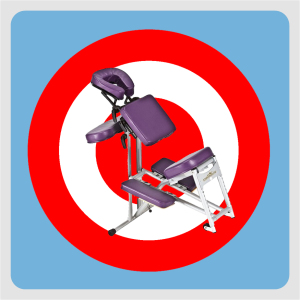 Here is a recent email from a massage student:
I will be graduating in December and have to write a business plan. I need to decide how chair massage will fit into the plan but don’t have much direction from school. I’m hoping you have some marketing advice or resources available to help my classmates and I know how we would move in the direction of chair massage.
In my reply, I first mentioned that there are some 26 articles about chair massage on this blog along with many others that have more generally to do with massage. Then I also sent her the following concise overview of the why’s and wherefore’s of chair massage marketing.
Options for including chair massage
There are three basic ways to integrate chair massage services into a professional practice:
- As a way to market your table practice. This typically means giving away free chair massage at events so that you can introduce people to your touch and your table work. Practitioners have done this successfully any place there is a group of people with time on their hands, e.g. queues on the sidewalk outside of popular restaurants or movies, church bazaars, charity events, health clubs, and waiting rooms of various stripes.This is a good option if your primary interest is in developing a table practice. After the practitioner has as many table customers as she wants, then the free chair massage tends to go by the wayside as the natural marketing momentum emerges from a well run table practice emerges.
- As a mix with your table practice. The difference from the first option is that here you are charging for your chair massage services in one or more of the three market segments described below. It still has the advantage of the first option in that you may also convert a certain portion of chair massage customers into table customers.Most practitioners use chair massage this way. In fact, I see a lot of experienced table practitioners adding chair massage to balance out their professional lives and raise their visibility in and connection to the community.
- As an exclusive chair massage practice. Some practitioners decide to focus
exclusively on chair massage. There are many possible reasons including:
- not wanting to deal with nudity,
- feeling more comfortable with shorter customer interactions,
- not wanting to work with oils or lotions,
- wanting to reach more people who can’t afford a table massage,
- not wanting to be restricted to four walls,
- not wanting to be working on the same 20 or so people every week.
Three markets for chair massage
There are also three general market segments where all chair massage is found:
- Events. These are situations jobs where you typically see customers once and never again. The largest markets are conventions, conferences, trade shows and corporate health fairs. However, the list of potential one-time events is endless ranging from weddings, reunions, back stage at theater events, athletic events, car racing, RV rallies, equestrian events and on and on. There are many local, as well as large regional and national chair massage businesses that focus exclusively on these markets.
- Workplace. This has also been a rich vein to mine for chair massage customers. Unlike events, these tend to be ongoing relationships with companies and their employees. The frequency of visits could be a long as a year apart or, more often, quarterly, bi-monthly, bi-weekly or even weekly.
- Retail. Providing chair massage services in a retail setting has been the slowest of the three segments to get off the ground because it requires the most up-front investment. However, the growth in retail chair massage has started to accelerate in the past 5 years, primarily due to the influx of Mainland Chinese immigrants flooding through the Los Angeles basin and scattering to shopping malls all across the country.
Finally, I mentioned that we have assembled an eBook in PDF format that can be ordered from the TouchPro Store here. It assembles the relevant articles from the blog into one convenient place and affordable price. (more…)
by David Palmer | May 8, 2014 | Chair Massage, Marketing
 Contrary to what many massage schools would have you believe, chair massage is not simply “table massage lite.” Any successful chair massage entrepreneur will tell you that it is a specialty. So the first step is to become a specialist. You can read books, take classes, and research chair massage on the Internet but there is no substitute for hands-on experience.
The best way to get started in workplace chair massage is by doing chair massage. National and regional chair massage companies are always looking to expand their referral lists of practitioners. Get on their lists and let them know about your enthusiasm for chair massage. When you are ready to strike out on your own you will be familiar with the mechanics of providing chair massage services in the workplace as well as a sense of the local market that you can only get by being on the front lines.
Don’t be intimidated by the large chair massage companies. Emphasize the advantages of being local. You have far more control over the quality and consistency of the chair massage including hygiene and screening protocols as well as the massage itself. If a problem crops up, like someone getting sick, a local business can often resolve the issue far more efficiently then someone in a different time zone.
Common pitfalls
An article about marketing chair massage would not be complete without a few words from Eric Brown. After creating his own successful chair massage service and training he also helped thousands of other practitioners figure out how to market their services. Besides emphasizing the primary importance of a strong Internet presence, Eric highlighted a couple of common mistakes that practitioners make when trying to build a chair massage business.
- Don’t ask companies to marry you before you have even had the first date. Companies only make long-term commitments with vendors that they trust. Start with one-time events, trial periods or short-term contracts during heavy workload periods so they can begin to understand the value of adding chair massage to their workplace.
- Target one niche at a time and hit it from all angles. Become an expert in that niche so that you know what typical problems exist in that market segment that chair massage could address. Network within that niche and educate them until you become known as the go-to expert on chair massage. A niche can be based on geography, age, profession, industry or any other demographic. Attend their meetings, join their associations, and write an article for their newspapers or trade magazines.
Jo Anderson is a case study in this approach. She had her web presence (lightworkschairmassage.com) but started by targeting Human Resource Directors in Birmingham, AL, whose names she culled from the local Business Journal’s Book of Lists (available in 59 cities). Then, when tax time came around, she used the same resource to mail out a flyer with a picture and cover letter to all of the CPA firms in Birmingham and eventually included all of the law firms. Even though the initial responses were few, they were enough to kick start her business and create word-of-mouth interest.
From the start Jo was not shy about giving away free chair massage at business and networking events held by groups such as Women in Business. She now has six practitioners working with her and just hired a PR firm to rebrand her business and upgrade all of her marketing materials.
When you are starting out and the search engines have not yet found you, don’t underestimate the power of your existing personal networks.
Caroleen Monnseratt used a personal connection and volunteered her services at a hospital in Anchorage, AK, to fulfill a practice requirement for a specialized training in chair massage. When she was ready to charge employees for her services, the hospital had no problem providing her with space on an ongoing basis and she has worked there one day a week since 2001.
Sally Nibblink’s primary chair massage customer is her husband’s small manufacturing company in Colorado. Don’t be afraid of a little nepotism.
Workplace chair massage services are poised for another growth spurt. They come in all shapes and sizes. You can devote your entire career to this sector or use it to supplement a table practice. Shape your practice to fit your needs.
by David Palmer | May 8, 2014 | Business, Marketing
This article originally appeared in the May 2014 issue of MASSAGE Magazine.
 Seated, or chair, massage is alive, well and flourishing in the workplace, primarily because of two overarching trends: evolving public perception of massage therapy and the impact of the Internet. Large companies and corporations that have contracted with seated massage companies include JetBlue, The Walt Disney Company, Brandeis University, Boeing, The Weather Channel, Gillette, Delta Airlines, Apple Inc., SunTrust Bank, Bank of America Investments and IBM—as well as countless smaller businesses that rely on seated massage to reduce employee stress while improving morale and productivity.
A look back
In 1982, the concept of professional massage done through clothing, on seated customers, out in the open, was as unfathomable as the notion there would someday be a computer in every pocket. Thirty years ago, marketing chair massage to corporations was often done by picking up the telephone and cold-calling. Now, add to that the experience of trying to describe a service no one had ever heard of before. I recall one human resources director fretting about the need for an electric outlet in the massage room. It was an understandable confusion, since the only massage chair she was familiar with was the kind you had to plug in.
Seated massage has come a long way in three decades, and is now a familiar part of the cultural landscape, regularly appearing in malls, in movies and in the workplace. In cities large and small, companies of all sizes use seated massage to keep employees happy and healthy.
As Carrie Mudrick-Rubel, owner of Massage on Wheels in Toronto, Ontario, Canada, said, “The amount of people who are aware of massage has increased over the years. We rarely get funny looks anymore from people when we walk into a building.”
Certainly, visibility helps, making seated massage itself one of the biggest drivers of changing perceptions of massage therapy overall. “Within our culture, the image of massage is improving—and chair massage has been leading the way because it is so accessible,” says Larry Trager, who has offered seated massage since 1982.
The public is increasingly understanding the wide range of potential benefits of professional massage, ranging from the basic feel-better sensation of most massage, through relaxation, health-promotion and disease-prevention benefits, all the way up to specific treatment of a variety of emotional and physical challenges.
“There is greater enthusiasm for chair massage. People treat it more like a necessity than 10 years ago,” says Robin Faux, a seated massage practitioner in Los Cruces, New Mexico.
This visibility and awareness of benefits of massage inevitably reach corporate decision-makers, albeit sometimes more slowly than we would like. Massage therapist Mary Cheers, of Dayton, Ohio, tells the story of a CEO who had been a table client for years and only became interested in chair massage for her employees after reading in a trade magazine about how good it was for increasing morale.
Online impact
If successful public relations created a more receptive climate for chair massage services, it was the Internet that offered the ideal condition for stimulating its growth.
Trying to locate potential customers of workplace chair massage is like searching for the proverbial needle in the haystack. It takes a lot of time and energy. While doing cold calls, mailing flyers or knocking on doors can still sometimes be useful for getting a seated massage business off the ground, without question the best contemporary strategy is to create an Internet presence and let companies looking for seated massage services find you.
Massage therapist Jessica Lugo began offering chair massage in Kansas City, Missouri, a year ago. She now provides seated massage at eight companies. She was initially inspired by her work with a chiropractor who paid her to go into corporations to provide free seated massage to promote his practice. She noticed a lot of interest in seated massage, and decided specializing in it would provide the flexibility she, a mother of four children, required.
One of her customers came from the chiropractor connection, but the other seven were hard-won by sending hundreds of emails, mailing dozens of flyers to local companies, and offering to provide free sample sessions. It took months of follow-up phone calls and legwork to land those seven clients and, while her persistence has paid off, in retrospect Lugo says the return was not worth the effort. She is now convinced future growth of her business lies in developing a website and creating an online presence.
Indeed, some of the largest chair massage companies market almost exclusively through the Internet. Infinite Massage, for example, spends 95 percent of its marketing budget on online advertising to keep their pool of more than 1,000 practitioners busy with seated massage. No matter where you are in the U.S., an Internet search for chair massage or seated massage will nearly always bring Infinite Massage at or near the top of the listings.
Trying to persuade the unenlightened of the value of seated massage, while noble, is not the most efficient use of time or money. The unconscious and deep-seated personal resistance many people still have toward massage can rarely be overcome by data, no matter how bottom-line oriented or scientifically persuasive.
However, being visible through the Internet to corporate decision-makers who are already looking for seated massage services is, at this point, a necessity. Make certain your website is search engine optimized, and create a presence on the major review sites, like Yelp, as well social media sites such as Facebook and LinkedIn.
Recession-proof your practice
Workplace seated massage can be roughly divided into two sectors: one-time events and regular appointments. To minimize the effect of a downturn, don’t put all of your eggs in the event basket. This lesson was strongly reinforced when the economy downturned in 2008.
Infinite Massage, for example, derives two-thirds of its national income from one-time events—and by the end of 2008, it had lost 35 percent of its revenue. Smaller seated massage businesses are even more vulnerable. Massage therapist Maryuri Velazquez in Davie, Florida, focused 90 percent of her seated massage services on workplace events, particularly corporate health fairs. The recession hit her hard, and most of her event work disappeared. When times are tough, corporations make the easiest cuts—and special events are always high on the list.
Just to be clear, although workplace event massage may be first to go in a recession, it is still a significant income stream at all other times. For example, many millions of dollars have been spent on massage at corporate health fairs. There are regional and national massage companies whose primary revenue comes from providing seated massage practitioners to such events. They connect with companies primarily through referrals from insurance companies and by working with third-party organizers of corporate wellness programs.
Likewise, one-time chair massage for rewards and incentives will always be popular with companies like the Austin, Texas, branch of Apple Inc., which brings seated massage practitioners in from Seize the Day for an annual staff-appreciation day.
The second way to recession-proof your seated massage business is by having employees, rather than the company, foot the bill. As long as employees have a job, they are loath to give up their regular chair massage. In fact, they may believe they need it even more during stressful economic times.
That is what massage therapist Larissa Golden experienced at Boeing in Seattle, Washington, where her company has been providing seated massage since 2006. The employees were emphatic that Boeing would pry their massage away only at the company’s peril.
All of the most enduring seated massage businesses understand this survival tactic. Employees at USAA Insurance in Tampa, Florida, have been paying for chair massage without interruption for the past 22 years, a service provided by Vitality Break, one of the original seated massage companies in the state.
Conversely, massage therapists Larry and Stephanie Trager attribute much of the longevity—three decades and counting—of their business, Corporate Touch, to company clients paying for all or a portion of their fee. They have found companies that split even a small percentage of the cost of seated massage with their employees have a difficult time cutting the program despite a challenging economy. They also say when a company pays for at least part of the massage, it sends a message to employees: It is the difference between a company just allowing chair massage on their premises and actually encouraging it.
Active support
That kind of active support can be helpful for guaranteeing the success of seated massage in the workplace. Internet marketing works so well precisely because at least one person in the company is pre-sold on the value of chair massage—or she wouldn’t be searching for it online.
In addition to subsidizing massage, there are a number of other ways companies can demonstrate commitment to seated massage at little or no cost:
- Providing the space for seated massage.
- Designating a specific person as a liaison to the seated massage service.
- Giving employees time off to get massage, rather than taking the time away from a break.
- Maintaining a scheduling system. Massage therapist Marcy Basile has the office manager do the scheduling at a 150-person software company in Houston, Texas. A manual system may be adequate, but one that employees can access from their computers is even better.
- Promoting the service. At USAA Insurance in Tampa, Florida, not only can the employees book online, reminders to sign up also periodically scroll in the newsfeed at the bottom of every monitor.
- Implementing payroll deductions, if the employees are paying for all or a portion of the massage. This is a huge convenience for both the practitioner and the employee.
Getting company involvement in these ways will bind them into a closer relationship with your seated massage business and encourage a long-term the partnership.
But there are no iron-clad guarantees. If the seated massage cheerleader leaves the company or the corporate culture shifts, then there is always the danger of being marginalized or even ousted
New directions
Since selling chair massage to the workplace is a mostly passive, Internet-based process, our active marketing efforts must continue to be directed toward education and public information.
Traditionally we emphasized the individual benefits of an increase in circulation and a decrease in the negative impact of stress. Now, we are reframing those rationales. Over the past 20 years, researchers have been slowly shifting their attention from studying the mechanisms of pathology—why we get sick—to the mechanisms of health. This mirrors the broader paradigm shift within our health care system from treatment to prevention.
by David Palmer | Jul 27, 2013 | Chair Massage, Marketing
 This question recently came in from a long-time chair massage practitioner:
Is there is a calculation for figuring out in advance how many people in a group (office, convention, health fair, etc.) will get a chair massage at a one-time event if it is offered for free? Say the employer or somebody else is paying for the service.
While I know of no formula or rule of thumb for that particular calculation, let’s reframe the question in terms of expectations. Whoever is paying for the massages wants to purchase just enough service so that the people expecting to receive a massage are not disappointed without paying for more massage time than needed.
So, what we are really looking for is both the number of people at the event expecting to get a chair massage and how high or low is their level of expectation. One way to gauge the level of expectation would be by classifying whether the event is open, closed or somewhere in between.
An open event is where there is a virtually unlimited number of people that could possibly get a massage, such as at a convention or street fair where chair massage is used as a traffic builder to get people to stop at a booth. In those situations, the expectation of getting chair massage will be relatively low.
A closed event has a fixed number of potential massage recipients, such as a one-time event in an office that might be used as a reward or incentive for the employees. In that case, the expectation of getting a massage would tend to be high.
 In between open and closed events are other situations, such as health fairs, where people might know that there will be free chair massage, might want one, but understand that there are a limited number of massage slots available, so their disappointment will be tolerable.
Open events
The open event is the easiest one to schedule because it is based on the budget of the customer paying for the services. Once the budget is determined, say $700, that number is divided by your hourly rate, say $70 per hour, which gives you the number of practitioner hours they will be paying for, in this example 10 hours. If the event runs for 5 hours, you would make two practitioners available.
The next question is how long are the massage slots that the customer wants for the event: 5-minute, 10-minute, 15-minute, or longer. Dividing the number of practitioner hours by the length of each massage gives you the approximate number of massage slots. It is approximate because you will probably have to use some of those slots for practitioner breaks, if the length of the event is greater than 2.5 to 3 hours. I personally don’t like to do more than 3 hours of massage without a break.
To finish the calculation for this example, say the customer wants 10-minute massage slots. That would be 6 slots an hour times 10 hours for a total of 60 slots. Subtract two 20-minute breaks (4 slots, one for each practitioner) and you could guarantee the customer that you will deliver 54 massages.
While the event organizer may have advertised the availability of free chair massage in advance of the event and some people may be disappointed if they didn’t get a massage, they generally won’t hold it against the sponsor of the event.
Closed events
In a closed event there is typically a fixed number of people to be massaged. For example, a company wants to thank each of its 100 employees with a chair massage for meeting a deadline. Here the calculations get a bit more complicated but, as a starting point, it is useful again to understand the calculation described above.
If each employee gets a massage in a 15-minute slot (4 slots per hour), then 25 practitioner hours will be required at a maximum cost of $1750 (if you are charging $70/hour). Since it is unlikely that all 100 employees will be able to get a massage (some will be sick, on vacation or just won’t want a massage), the next step is to make an estimate with the customer for the number of slots to schedule.
After you explain the calculation above, if there is a long lead time to the event, some customers will want to survey their employee’s interest to come up with a number, others will want to just make their best guess.
In any case, the number of practitioner hours you decide upon is what goes into the contract with the customer and that is how the schedule gets set. If the customer opts for a conservative number of slots and you have the flexibility, you could offer to add more slots if the original amount fills up quickly and they end up having a waiting list. That would have to be spelled out in the contract and agreed upon by the practitioners actually doing the massage.
In closed events there is often an implied guarantee that everyone who wants a massage will get a massage, so ensuring that both the customer and the recipients are happy is challenging. Thus, when you are working off a schedule, make sure that you have the extension number of each person scheduled in case you have to call to remind them of their appointment. If, on the day of the event, someone is sick, you can also offer to do double sessions if the event coordinator cannot otherwise fill in the slot.
Semi-closed events
A corporate health fair is a typical semi-closed event where generally a fixed number of people are expected but there is no guarantee of everyone getting a massage.
As in the first two cases, after you explain the basic calculation, you can help the customer to decide how many slots and what slot length they can purchase with their budget constraints.
A final word about scheduling
Customers like to get what they paid for, which means they generally don’t like to see practitioners standing around doing nothing. This can be tricky in situations where there is no pre-scheduling of the massage slots and recipients get taken on a first-come, first-served basis (often involving a clipboard).
In those situations, having some flexibility in the length of the massage is helpful. For example, often things are slow at the beginning of the event. That is a good time to give longer chair massages. As the number of people in line waiting for a massage grows, the practitioners can begin shortening their massages until the minimum slot-time agreed upon is reached. The goal should be to always have someone in every chair getting a massage, even if it is the practitioners working on each other.
Meeting expectations
Understanding the expectations of the customer and the massage recipients is key to repeat business and positive recommendations. Remember, customers come to you because you are the expert. Helping to clarify the decisions they have to make is step one. Now delivering a great massage is up to you.
A special shout out to Tom Darilek and Debra Rilea for their help in framing this question and response.
