by David Palmer | Oct 2, 2014 | Chair Massage, Marketing
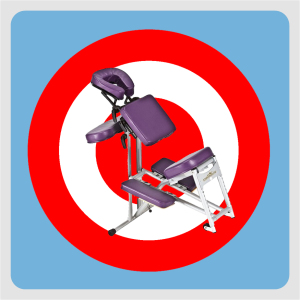 Here is a recent email from a massage student:
I will be graduating in December and have to write a business plan. I need to decide how chair massage will fit into the plan but don’t have much direction from school. I’m hoping you have some marketing advice or resources available to help my classmates and I know how we would move in the direction of chair massage.
In my reply, I first mentioned that there are some 26 articles about chair massage on this blog along with many others that have more generally to do with massage. Then I also sent her the following concise overview of the why’s and wherefore’s of chair massage marketing.
Options for including chair massage
There are three basic ways to integrate chair massage services into a professional practice:
- As a way to market your table practice. This typically means giving away free chair massage at events so that you can introduce people to your touch and your table work. Practitioners have done this successfully any place there is a group of people with time on their hands, e.g. queues on the sidewalk outside of popular restaurants or movies, church bazaars, charity events, health clubs, and waiting rooms of various stripes.This is a good option if your primary interest is in developing a table practice. After the practitioner has as many table customers as she wants, then the free chair massage tends to go by the wayside as the natural marketing momentum emerges from a well run table practice emerges.
- As a mix with your table practice. The difference from the first option is that here you are charging for your chair massage services in one or more of the three market segments described below. It still has the advantage of the first option in that you may also convert a certain portion of chair massage customers into table customers.Most practitioners use chair massage this way. In fact, I see a lot of experienced table practitioners adding chair massage to balance out their professional lives and raise their visibility in and connection to the community.
- As an exclusive chair massage practice. Some practitioners decide to focus
exclusively on chair massage. There are many possible reasons including:
- not wanting to deal with nudity,
- feeling more comfortable with shorter customer interactions,
- not wanting to work with oils or lotions,
- wanting to reach more people who can’t afford a table massage,
- not wanting to be restricted to four walls,
- not wanting to be working on the same 20 or so people every week.
Three markets for chair massage
There are also three general market segments where all chair massage is found:
- Events. These are situations jobs where you typically see customers once and never again. The largest markets are conventions, conferences, trade shows and corporate health fairs. However, the list of potential one-time events is endless ranging from weddings, reunions, back stage at theater events, athletic events, car racing, RV rallies, equestrian events and on and on. There are many local, as well as large regional and national chair massage businesses that focus exclusively on these markets.
- Workplace. This has also been a rich vein to mine for chair massage customers. Unlike events, these tend to be ongoing relationships with companies and their employees. The frequency of visits could be a long as a year apart or, more often, quarterly, bi-monthly, bi-weekly or even weekly.
- Retail. Providing chair massage services in a retail setting has been the slowest of the three segments to get off the ground because it requires the most up-front investment. However, the growth in retail chair massage has started to accelerate in the past 5 years, primarily due to the influx of Mainland Chinese immigrants flooding through the Los Angeles basin and scattering to shopping malls all across the country.
Finally, I mentioned that we have assembled an eBook in PDF format that can be ordered from the TouchPro Store here. It assembles the relevant articles from the blog into one convenient place and affordable price. (more…)
by David Palmer | Jan 7, 2014 | Chair Massage, History, Videos
[youtube_sc url=”http://www.youtube.com/watch?v=6FFlwzIZusY&feature=share&list=PL1mtdjDVOoOpzYNFdLmgAxAaKTzwrOi2z” title=”David%20Palmer%20-%20Inventor” fs=”1″]Sometime around 2008, New York-based photographer David Friedman flew out to San Francisco to include me in an
online series of portraits he was doing on inventors. During the photo shoot he also recorded a video interview which recently appeared on a new YouTube Channel called
PBS Digital Studios.
Even though I was having a bad hair day the 3-minute video is well-edited and covers my essential motivations behind the development of the first massage chair. What isn’t specifically mentioned in the piece is the name of best massage chair on the market, the Stronglite Ergo Pro, which I co-developed.
One note about the video. The chair massage being performed was shot at a salon/spa in Brooklyn and has nothing in common with the chair massage approach we teach through TouchPro. Knee in the back? Ouch!
You can also read a more detailed version of the history of the first chair and view a cute video of the original chair. Enjoy!
by David Palmer | Jan 7, 2014 | Bodywork, Touch
 A recent article in The Atlantic about a phenomenon called ASMR (autonomous sensory meridian response) reminded me of how little we celebrate the purely sensational nature of massage.
ASMR is a subjective sensory experience that typically includes highly pleasurable tingling in the head triggered by external audio or visual stimuli such as whispering, tapping or watching certain videos. Possibly because someone early on began referring to this sensation as a “brain orgasm,” the ASMR meme went viral with articles appearing on Slate, Time, and Huffington Post as well as numerous podcasts and radio programs. YouTube already lists nearly 2 million videos on the subject.
I had two reactions when I first read about ASMR. The first was, “What’s the fuss about? Every time I get a massage, I tingle all over, including in my head and brain.” My second thought was, “How come massage doesn’t have 2 million videos on how good massage feels?”
Professional massage exists on a social acceptability spectrum that can be summarized into four major categories: Sexual, sensual, wellness, and therapy. For the past 30 years the goal of the mainstream massage industry has been to highlight the latter two categories while downplaying the first two in an attempt to create as much distance as possible between massage and any hint of prostitution.
In the process, the fact that, first and foremost, massage feels good has gotten lost. That is unfortunate because, as science is now discovering, feeling good is probably one of the best things that we can do for our ongoing health and well being.
Learning how to stimulate a parasympathetic (relaxation) response, as massage does quickly and so effectively, is crucial to the daily health and renewal of virtually every physiological system in our bodies, not to mention the maintenance of a healthy psycho-social balance.
“Massage is not just pampering,” popular magazine headlines try to convince us. I say, what’s wrong with pampering if it boosts the immune system, lowers blood pressure, reduces stress hormones, increases oxytocin and heightens heart rate variability, a marker of parasympathetic response? A simple, caring massage is also an unconditional validation of my existence that nurtures both internal and external empathy. What’s not to like?
All massage is sensational. It makes us feel more and it makes us feel better. What a gift is the massage that banishes the numbness with which we armor our bodies and our spirits. Let us celebrate the sensational essence of massage and start making those videos.
by David Palmer | Feb 27, 2012 | Business
The first professional massage I ever received was around 1970 in an old Russian Banya on the near-North Side of Chicago called the Luxor Baths. The clientele was a mix of the old Jewish expats who had moved to the suburbs (Nelson Algren used to hang out here) and the new Hispanic locals. Luxor was an artifact from an earlier time complete with swimming pool, wet and dry saunas, a steam room and metal tables where friends would beat and brush each other with soapy oak leaf brooms.
Luxor also had a massage room and, with some encouragement from my friends, I finally gave massage a try. It was a memorable experience and I have been hooked ever since.
Notably, I didn’t get my first massage because something was wrong with me. I got a massage because it made me feel great and that is the experience I have been seeking to share with the world ever since.
Traditionally, within most cultures, professional massage has operated in two very discreet economic realms: the personal care services industry and the health care industry.
- As a personal care service, massage is found in saunas, spas, hair salons, in the foot massage services provided in the streets of near- and far-Eastern Asian countries as well as neighborhood bathhouses and as various forms of seated massage now throughout the world. This is the kind of massage I received at the Luxor Baths.
- In the health care industry, massage evolved through a variety of healing modalities, such as osteopathy and chiropractic, orthopedic practice, nursing and physical therapy (called physiotherapy in many countries).
 These two domains were easily distinguished from one another both by terminology (customers vs. patients) and by intention (relaxation vs. treatment) and there was generally little confusion or overlap.
That clarity started to dissolve in the 1970s as a new economic arena began to emerge. It was called “health promotion” or “wellness” and was a reaction to the dominant health care paradigm, which in fact did not focus on health care, but rather sickness care.
The counterculture that emerged from the sixties first manifested this new approach by embracing such practices as natural childbirth, organic and vegetarian diets, supplements and herbs, and varieties of personal growth dubbed the “human potential movement.” Books such as Our Bodies Ourselves began to advocate rejection of the cult of experts in favor of personal responsibility and control. The goal became prevention, not treatment, and creating a balance that integrated the mind, body and spirit into a unified whole.
Inevitably, business began to capitalize on this cultural trend and the fitness industry was born. Health clubs replaced gyms, Nike shoes replaced sneakers, wellness centers replaced spas and self-help programs replaced the confessional. Also about this time, corporate wellness programs started to get a foothold as companies began to suspect that the only way to reduce their ever-rising health care costs was by encouraging employees to maintain good health through proper exercise, diet, and emotional balance.
Massage slipped easily into this new and exciting economic domain. The Esalen Institute in California championed new approaches to massage that focused on mind/body integration as well as a new category called “bodywork” that included innovative modalities developed by Ida Rolf, Milton Trager and Moshe Feldenkrais.
The advent of this new wellness arena, however, has muddied the once clear distinction between personal care services and health care services as both try to carve for themselves a slice of the wellness pie.
And where has that left the massage industry? Also very muddied. According to the massage schools, associations and regulators, massage is no longer a personal care service, it is a health care service. I can no longer get a massage like I did 40 years ago at the Luxor Baths. Now I have to get massage therapy. But I don’t want a health care massage. I don’t even want a wellness massage. I just want to lie down and bliss out in the hands of someone who makes me feel good. I don’t care if the practitioner has 50 or 500 hours of training. If I like the massage, I will go back. If I don’t, I won’t.
We need to bring back and validate the personal care massage realm. That is where the most growth is happening (chair massage and franchise table massage), that is where the jobs are, and that is where I want to get my massage.
Do you believe massage should reclaim its identity as a personal care service? Does defining massage exclusively as “therapy” confuse the public and needlessly restrict our growth?
by David Palmer | Feb 5, 2012 | Chair Massage, Videos

Click on the picture to view the video demonstration
While there are probably more infectious agents on the doorknob customers touch as they enter your massage space than are on your massage chair, the public nature of chair massage makes a solid hygiene protocol essential. It is a matter both of perception and professionalism.
I have seen potential customers stand in front of a line of massage chairs at an event carefully scrutinizing the hygiene habits of the various practitioners to find the one that best lives up to their standards. As the media continues to spotlight drug-resistant infections and virulent pathogens spreading around the globe, the general public is becoming increasingly germ-phobic.
Since we are trying to reduce stress, rather than increase it, we need to set customer’s minds at ease by being proactive about hygiene. There should never be a concern about customers spreading bugs to one another, or to me, or from me to them.
In terms of liability, having a simple, consistent hygiene protocol makes it easier to explain clearly to customers, health department personnel and lawyers the impossibility of someone, for example, having acquired herpes from sitting in your chair.
Wipe down. Cover up.
The two-step protocol TouchPro recommends starts with a canister of hospital-grade sanitary wipes. We use two sheets, one in each hand, to sanitize the chair at the start of the day as well as between each customer.
At the beginning of the shift, every vinyl surface is wiped, along with the adjustment hardware and any other metal or plastic parts around the face cradle. Between each customer the minimum rule is to wipe down the face cradle, arm rest and any other part of the chair that might have had skin to vinyl contact, typically the leg rests if the previous customer was in a skirt or shorts. The final step is to put the two sanitizer sheets together and wipe your own hands thoroughly.
Here’s a note about the wipe down process. The basic rule is, the juicier the better. The effectiveness of the sanitizers at killing the bugs is directly related to how long the moisture stays on the vinyl or your hands. That’s why we recommend wiping down the chair immediately after a massage, so you don’t have to keep the customer waiting before a massage for the alcohol to evaporate.
After the wipe down, the face cradle should be covered up to prevent the customer’s face from touching vinyl. The preference of the practitioner determines whether paper towels, cut-out or form-fitted disposable covers, or washable cloth covers are used.
Back in 1986, we started with paper towels but quickly moved to the round, disposable nurses caps with a breathing hole or slit cut into the center. When the form-fitted disposable face cradle covers came on the market around 2005, we switched to those and never looked back.
Addition hygiene issues
Obviously, everything you learned in massage school about keeping your fingernails, hands, breath and “pits” clean applies to chair massage, but there are a couple of other issues that should also be considered in your hygiene protocol.
In 2009, during the H1N1 avian flu pandemic scare, the media was in a frenzy over the potential deadly effects of the virus. To allay any fears of our customers, I wanted to advertise that all of the chair massage practitioners in our studio had been vaccinated to prevent them from contracting and/or spreading the virus. Unfortunately, because it was a new strain, the vaccine was rationed to the very young, old, immune-suppressed and front-line healthcare workers. Because of the shortage we were never able make that guarantee but every year since, I get myself vaccinated as early as possible. Annual flu vaccination as part of a chair massage hygiene policy just makes sense.
And, finally, what about those doorknobs? In a chair massage studio, I do disinfect them at the beginning of every day, unless they are brass. Brass doorknobs disinfect themselves in about eight hours, while stainless steel and aluminum knobs never do. It’s called the “oligodynamic effect.”
In summary, have a hygiene policy, write it down, and make sure everyone in your business follows it.
Check out the companion video.
