by David Palmer | Feb 12, 2015 | In the News, Science
An article out today from The Atlantic outlines the conclusions of a recent working paper from Harvard and Stanford Business Schools on the impact of high workplace stress levels on employee health.
"The paper found that health problems stemming from job stress, like hypertension, cardiovascular disease, and decreased mental health, can lead to fatal conditions that wind up killing about 120,000 people each year—making work-related stressors and the maladies they cause, more deadly than diabetes, Alzheimer’s, or influenza.
"High levels of stress are costly in monetary terms, too. Researchers found that stress-related health problems could be responsible for between 5 to 8 percent of annual healthcare costs in the U.S. That amounts to about $180 billion each year in healthcare expenses."
by David Palmer | Oct 2, 2014 | Chair Massage, Marketing
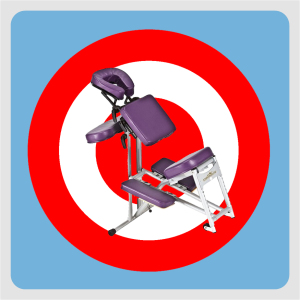 Here is a recent email from a massage student:
I will be graduating in December and have to write a business plan. I need to decide how chair massage will fit into the plan but don’t have much direction from school. I’m hoping you have some marketing advice or resources available to help my classmates and I know how we would move in the direction of chair massage.
In my reply, I first mentioned that there are some 26 articles about chair massage on this blog along with many others that have more generally to do with massage. Then I also sent her the following concise overview of the why’s and wherefore’s of chair massage marketing.
Options for including chair massage
There are three basic ways to integrate chair massage services into a professional practice:
- As a way to market your table practice. This typically means giving away free chair massage at events so that you can introduce people to your touch and your table work. Practitioners have done this successfully any place there is a group of people with time on their hands, e.g. queues on the sidewalk outside of popular restaurants or movies, church bazaars, charity events, health clubs, and waiting rooms of various stripes.This is a good option if your primary interest is in developing a table practice. After the practitioner has as many table customers as she wants, then the free chair massage tends to go by the wayside as the natural marketing momentum emerges from a well run table practice emerges.
- As a mix with your table practice. The difference from the first option is that here you are charging for your chair massage services in one or more of the three market segments described below. It still has the advantage of the first option in that you may also convert a certain portion of chair massage customers into table customers.Most practitioners use chair massage this way. In fact, I see a lot of experienced table practitioners adding chair massage to balance out their professional lives and raise their visibility in and connection to the community.
- As an exclusive chair massage practice. Some practitioners decide to focus
exclusively on chair massage. There are many possible reasons including:
- not wanting to deal with nudity,
- feeling more comfortable with shorter customer interactions,
- not wanting to work with oils or lotions,
- wanting to reach more people who can’t afford a table massage,
- not wanting to be restricted to four walls,
- not wanting to be working on the same 20 or so people every week.
Three markets for chair massage
There are also three general market segments where all chair massage is found:
- Events. These are situations jobs where you typically see customers once and never again. The largest markets are conventions, conferences, trade shows and corporate health fairs. However, the list of potential one-time events is endless ranging from weddings, reunions, back stage at theater events, athletic events, car racing, RV rallies, equestrian events and on and on. There are many local, as well as large regional and national chair massage businesses that focus exclusively on these markets.
- Workplace. This has also been a rich vein to mine for chair massage customers. Unlike events, these tend to be ongoing relationships with companies and their employees. The frequency of visits could be a long as a year apart or, more often, quarterly, bi-monthly, bi-weekly or even weekly.
- Retail. Providing chair massage services in a retail setting has been the slowest of the three segments to get off the ground because it requires the most up-front investment. However, the growth in retail chair massage has started to accelerate in the past 5 years, primarily due to the influx of Mainland Chinese immigrants flooding through the Los Angeles basin and scattering to shopping malls all across the country.
Finally, I mentioned that we have assembled an eBook in PDF format that can be ordered from the TouchPro Store here. It assembles the relevant articles from the blog into one convenient place and affordable price. (more…)
by David Palmer | May 8, 2014 | Chair Massage, Marketing
 Contrary to what many massage schools would have you believe, chair massage is not simply “table massage lite.” Any successful chair massage entrepreneur will tell you that it is a specialty. So the first step is to become a specialist. You can read books, take classes, and research chair massage on the Internet but there is no substitute for hands-on experience.
The best way to get started in workplace chair massage is by doing chair massage. National and regional chair massage companies are always looking to expand their referral lists of practitioners. Get on their lists and let them know about your enthusiasm for chair massage. When you are ready to strike out on your own you will be familiar with the mechanics of providing chair massage services in the workplace as well as a sense of the local market that you can only get by being on the front lines.
Don’t be intimidated by the large chair massage companies. Emphasize the advantages of being local. You have far more control over the quality and consistency of the chair massage including hygiene and screening protocols as well as the massage itself. If a problem crops up, like someone getting sick, a local business can often resolve the issue far more efficiently then someone in a different time zone.
Common pitfalls
An article about marketing chair massage would not be complete without a few words from Eric Brown. After creating his own successful chair massage service and training he also helped thousands of other practitioners figure out how to market their services. Besides emphasizing the primary importance of a strong Internet presence, Eric highlighted a couple of common mistakes that practitioners make when trying to build a chair massage business.
- Don’t ask companies to marry you before you have even had the first date. Companies only make long-term commitments with vendors that they trust. Start with one-time events, trial periods or short-term contracts during heavy workload periods so they can begin to understand the value of adding chair massage to their workplace.
- Target one niche at a time and hit it from all angles. Become an expert in that niche so that you know what typical problems exist in that market segment that chair massage could address. Network within that niche and educate them until you become known as the go-to expert on chair massage. A niche can be based on geography, age, profession, industry or any other demographic. Attend their meetings, join their associations, and write an article for their newspapers or trade magazines.
Jo Anderson is a case study in this approach. She had her web presence (lightworkschairmassage.com) but started by targeting Human Resource Directors in Birmingham, AL, whose names she culled from the local Business Journal’s Book of Lists (available in 59 cities). Then, when tax time came around, she used the same resource to mail out a flyer with a picture and cover letter to all of the CPA firms in Birmingham and eventually included all of the law firms. Even though the initial responses were few, they were enough to kick start her business and create word-of-mouth interest.
From the start Jo was not shy about giving away free chair massage at business and networking events held by groups such as Women in Business. She now has six practitioners working with her and just hired a PR firm to rebrand her business and upgrade all of her marketing materials.
When you are starting out and the search engines have not yet found you, don’t underestimate the power of your existing personal networks.
Caroleen Monnseratt used a personal connection and volunteered her services at a hospital in Anchorage, AK, to fulfill a practice requirement for a specialized training in chair massage. When she was ready to charge employees for her services, the hospital had no problem providing her with space on an ongoing basis and she has worked there one day a week since 2001.
Sally Nibblink’s primary chair massage customer is her husband’s small manufacturing company in Colorado. Don’t be afraid of a little nepotism.
Workplace chair massage services are poised for another growth spurt. They come in all shapes and sizes. You can devote your entire career to this sector or use it to supplement a table practice. Shape your practice to fit your needs.
by David Palmer | May 8, 2014 | Business, Chair Massage
 At 31 years, there is little doubt The Walt Disney Company is the oldest continuing corporate supporter of seated massage in the world. Michael Neal began taking a stool around the Disney campus in 1982, providing employee-paid massage. When he retired 18 years later, another practitioner who had also begun working at Disney, Allen Chinn, was ready to pick up the baton from Neal. Besides continuing to work on employees, Chinn occasionally gets paid directly by Disney for individual events such as health fairs.
The reason why Disney originally allowed chair massage on the premises was not complicated. The employees wanted it and no one objected. Disney provided no specific location for the chair massage and there was certainly no scheduling or promotional support. It was all very ad hoc, but it worked.
To discover what seated-massage companies think they are selling these days. you only need to scan a few of their websites. As Rob Nitzschke, from Manchester, New Hampshire, summarizes: “What companies are looking for is a happier workforce, greater productivity, loyalty and retention in their staff and increase the perception of the employees that they are cared for.” What the employees are primarily seeking is instant rejuvenation.
While these traditional rationales still exist, thoughtful business owners, like massage therapist Larisa Goldin, are finding other ways to segment the markets for workplace chair massage. Larisa surveyed her current clients around the Seattle, Washington, metropolitan area to find out why they were buying seated massage. She identified new categories of corporate clients.
- The Challenging Workplace. These are the specifically high stress environments where employees are coping with difficult workloads or difficult environments, such as hospitals and schools.
- The Growing Workplace. Competitive industries, such as high tech and bio-tech, see a recruitment advantage by including chair massage in their benefits mix. Rob Nitzschke puts it this way: “They want bragging rights to be able to say our corporate culture is tops.”
- The Progressive Workplace. There is no question that 21st century companies are far more likely to have someone in a decision-making position who genuinely believes in the importance of massage. They are also more likely to have a culture that encourages and responds to input from their employees. Larisa mentioned Path, a large international non-profit with 500 serious, focused young employees who internally decided that they wanted regular chair massage. They got it.
Pay close attention to the millennials. They have grown up with a far more positive idea about massage than any other generation in history and the massage industry is just beginning to reap the benefits. Listen to what they want out of massage and how they want it delivered. To a great extent they control the future of workplace massage.
by David Palmer | May 8, 2014 | Touch
Touch is good for us. While that may come as no surprise to the massage profession, research that helps us describe the underlying physiology of touch is a tremendous breakthrough. We can now tell our customers exactly why massage makes them feel good.
Within seconds of receiving positive touch, two indisputable and totally involuntary reactions occur. The first is that the bloodstream gets flooded with oxytocin, the feel-good hormone. The second is the stimulation of the parasympathetic nervous system response, otherwise known as the relaxation response.
Oxytocin immediately makes us feel calm and connected in empathetic ways to both our internal and external environments. When the relaxation response is triggered, our bodies move into healing mode where digestion occurs, organs repair and our immune response is supported. This is the opposite of the stress response.
These simple ideas can be quickly communicated—verbally and in printed and line marketing materials—and add an important scientific layer of credibility to our simple touch services. We no longer have to promise musculoskeletal miracles, but can confidently make the case that positive touch is enough.
