What we need to know about touch

Skin stimulation (touching) is essential to maintaining physical, psychological and social well-being, according to an ever-increasing body of scientific literature. Since touch is the fundamental tool through which massage professionals interact with those who pay for our services, it seems obvious that we should have the deepest understanding of touch and touching. So, how do the skilled touch professions become the recognized experts on the subject of touch and touching?

I would like to propose an outline for a comprehensive body of knowledge about the sense of touch. I believe the skilled touch professions, as a community, already has access to this information, just not in one place. There still is no comprehensive textbook on touch for the massage profession or any other profession for that matter.

While every practitioner does not need to be an expert in every aspect of touch and touching, every practitioner should be familiar with all of the elements present in a touch experience. Obviously, that means that all schools and teachers of professional touch should be able to address these topics. Think of the following categories as chapters in that as yet unwritten textbook.

  • The evolutionary development of touching: Our genetic heritage
  • The anatomical structures and physiology of skin
  • The developmental requirements for human touching
  • The variety of cultural attitudes toward touching
  • The subjective perception of the initiator of touch
  • The subjective perception of the receiver of touch
  • The intention of the initiator of touch
  • The psycho-social-physical benefits of touching
  • The mechanics of touching
  • The manifestations of touching
  • The history of professional touching
  • Touch research
  • The institutional regulation of touching

Clearly, there is a lot to know about touch and touching. It is also obvious that schools which train skilled touch professionals tend to emphasize only a few of the categories above, in particular the mechanics of touching. That is not surprising for three reasons.

  1. Both academia that researches skilled touch and the vocational schools that teach skilled touch have been hampered by the touch-phobic milieu of the culture.
  2. As a result, academic interest in touch research has lagged far behind the attention paid to the other four primary senses.
  3. And, without the science, that comprehensive textbook on touch referred to earlier has not been written.

Fortunately, all of that has begun to change dramatically in the past generation as, in particular, the massage industry has successfully legitimized a place for skilled touch in the modern world. Primary credit for that success has to be given to the public and private massage associations, massage schools, their practitioners and businesses. While we don’t yet have a touch-positive culture, we are definitely moving in that direction. That will continue to spur interest in touch research and eventually result in the development of those crucial textbooks.

What do you think a comprehensive body of knowledge about touch and touching should include? Please add your comments below.
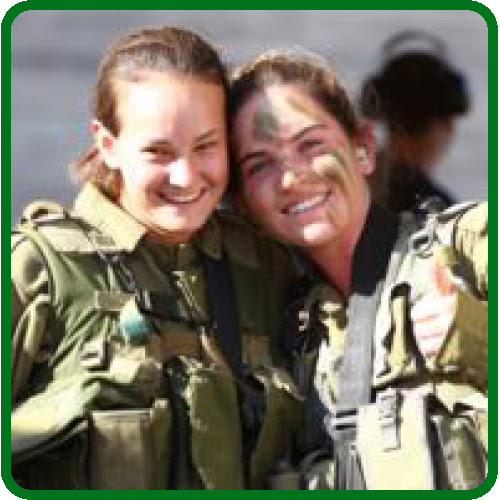
Why Do We Touch?

Why Do We Touch_imgOne important characteristic of all touching is the intention of the person initiating the touching. Much of the time the intention behind the touch is not conscious or it is presumed. However, adding conscious intention adds a deeper level of connection to the touch interaction.

Take, for example, a simple handshake upon meeting another person. The intention of a handshake is to greet the other person, to make a social connection, to show trust and respect. As a social habit it is automatic and generally unconscious.

Now imagine a handshake from someone who really consciously shakes your hand, feels the touch of your hand as a singular experience, and perhaps even emphasizes that consciousness by taking your hand in both of theirs and looking you directly in the eyes. Immediately the quality of the relationship changes. It is more intimate, more deeply connecting, more engaging. A great part of the charisma of famous people like Bill Clinton is often attributed to the great intentionality they bring to their handshakes and hugs.

All touching falls on a spectrum from harmful to neutral to positive touching. Below is an evolving list of non-harmful intentions of a touch initiator with particular thanks, to Janet Courtney, Director of Developmental Play & Attachment Therapies. The core of this list emerged from a survey she co-developed with Angela Siu for a study entitled: Practitioner Attitudes of Touch in Working with Children and Families in Child Counseling and Play Therapy.

Initiating Intentions of Touching

  • Accidental touching: Brushing up against someone as you pass on the street or on a bus generally has no intention or purpose and would be considered neutral touch.
  • Touching for greeting and departure: Handshakes, hugs, and kisses signal different levels of intimacy, depending on the culture. Sudanese greet by putting hands on the shoulder of the other person.
  • Attentional touching: Touching someone’s arm (or hand, or shoulder) allows the initiator to direct the focus of the receiver for greater attention or emphasize.
  • Assistive touching: Guiding another’s hand or body through space is often an essential part of teaching body-based skills such as dance, massage, playing an instrument. It also includes the rehabilitative learning of skills that have been lost through injury or disease.
  • Reinforcing touching: A pat on the back can strengthen a particular behavioral or emotional response.
  • Playful touching: Tickling and “roughhousing” are common examples of touching that creates greater connection and non-sexual intimacy. The growing movement of adult “cuddle clubs” could be included here as well as in the next two categories.
  • Nurturing touching: The fundamental need for physical contact, skin stimulation and security are all addressed by nurturing touching. In babies and children this is critical to forming healthy attachments.
  • Affectionate touching: This touching is initiated as an expression of care, comfort, and reassurance.
  • Restraining touching: This touching is initiated to prevent the person being touched from harming themselves or others and most commonly occurs in parent to child touching.
  • Cathartic touching: Unconditional intentional touch such as holding, cradling, hugging or massage can allow people to access to their vulnerable personality parts and can facilitate a release of repressed emotions. This is often used in cunjunction with talk therapy.
  • Grooming: This category includes cleaning, trimming, massaging or decorating the hair, skin, ears, teeth, fingernails, and toenails of another person. Children usually receive this touch from their parents and adults from professional groomers.
    • Professional massage: There are well over a hundred various modalities of massage and bodywork with probably as many different intentions. However, in general, the skilled touch professions tend to fall into three categories of intention: Systemic, which promote relaxation and well-being; Corrective, which tend to focus on remediating musculoskeletal problems; and Eclectic, which is every other intention not included in the first two.
  • Erotic touching: It is interesting to note that there is a spectrum of erotic intention that ranges from spontaneous to structured touch. Cultural movements such as “No means no!”, by requiring permission and negotiation before any touch even occurs move at least the initiation of touch closer to the calculated end of the spectrum.

This spectrum of spontaneity mentioned above can also be overlaid on all of the touching intentions outlined and is an important consideration. The more structure there is to the touch interaction, the safer it tends to be. There is little doubt that one of the main drivers of the massage profession is the fact that, at its best, it provides an environment for safe, unconditional touch. The cultural pendulum is clearly swinging back in the direction of setting clear boundaries for touch. Let us not be distressed by the move toward more calculated touch in our relationships. I suspect it is just the first step toward creating a truly touch positive world where healthy, spontaneous touch is ultimately the new norm.

Please add your thoughts and suggestions about these categories of touch intention below.